
Introduction
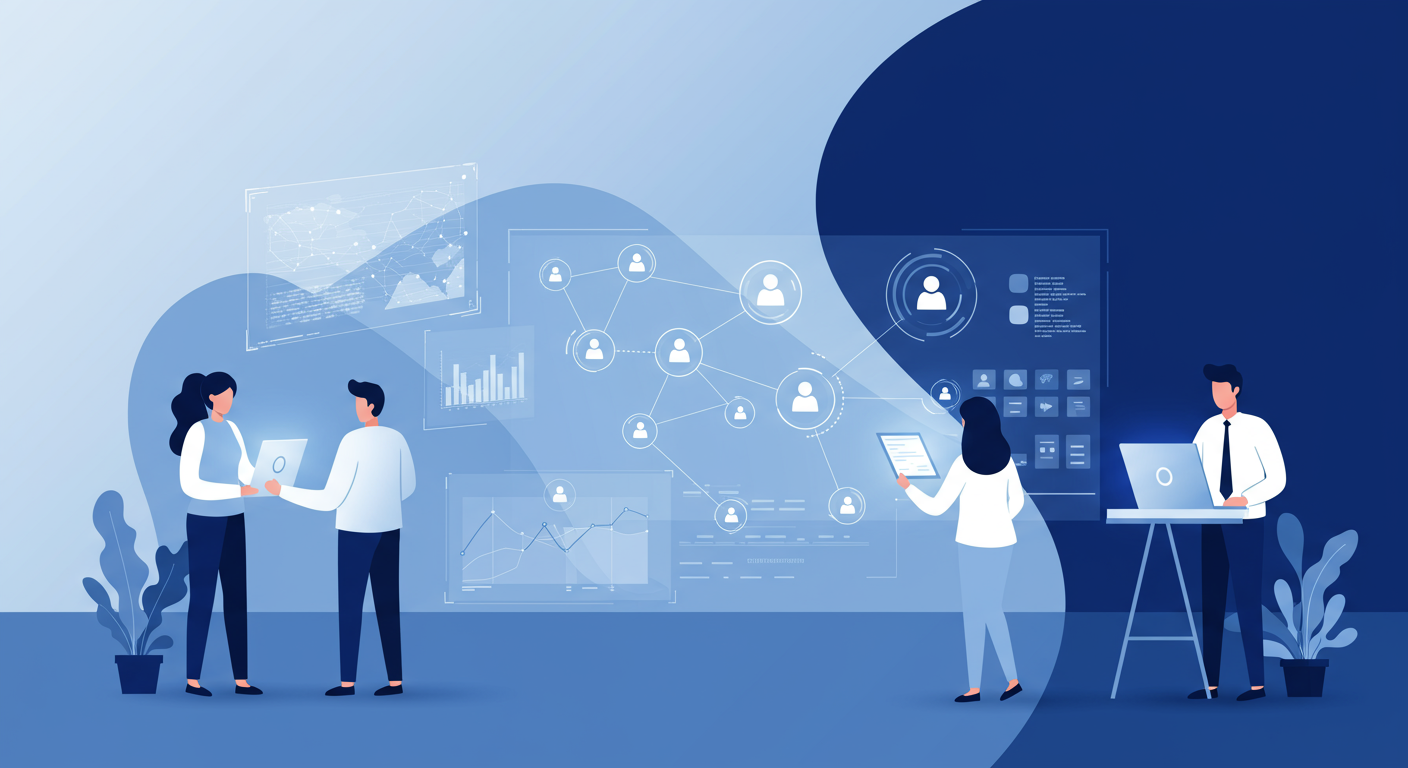
There is a common misconception that artificial intelligence (AI) is here to replace human jobs. In reality, AI is more of an augmentation tool—enhancing human capabilities rather than eliminating them. Businesses that embrace AI can create new opportunities, boost productivity, and empower employees to focus on higher-value tasks. This guide explores how AI is augmenting rather than replacing the human workforce and how businesses can successfully integrate AI-driven solutions.
How AI Enhances Human Work
AI is reshaping industries by automating repetitive tasks and providing employees with valuable insights, leading to more efficient workflows. Here’s how AI enhances human work:
- Automation of Repetitive Tasks: AI takes over mundane, time-consuming tasks, freeing up employees for more strategic work.
- Enhanced Decision-Making: AI-driven analytics process large data sets, helping employees make more informed decisions.
- Improved Collaboration: AI-powered tools improve communication and project management, leading to smoother teamwork.
- Upskilling and Training: AI-based learning platforms provide personalized training, helping employees develop new skills.
Industries Where AI Augments the Workforce
1. Healthcare
AI assists doctors with diagnostics, automates administrative tasks, and helps in drug discovery, allowing healthcare professionals to focus on patient care.
2. Finance
AI-driven financial tools analyze market trends, detect fraud, and automate bookkeeping, supporting professionals in making accurate financial decisions.
3. Manufacturing
AI-powered robotics handle repetitive assembly line tasks while human workers focus on supervision, maintenance, and innovation.
4. Retail
AI improves customer service through chatbots, demand forecasting, and personalized recommendations, enhancing the shopping experience without replacing retail employees.
5. Marketing
AI automates campaign analysis, ad targeting, and content personalization, allowing marketers to focus on strategy and creativity.
AI and Job Creation
Contrary to the fear of job losses, AI is creating new job opportunities in various fields. Some emerging AI-related roles include:
- AI Ethics Specialists: Professionals ensuring responsible AI usage and compliance.
- AI Trainers: Experts teaching AI models how to interpret data effectively.
- Data Analysts: Individuals who analyze AI-generated insights to drive business strategies.
- Automation Managers: Professionals overseeing AI-driven automation processes.
How Businesses Can Integrate AI Without Workforce Disruption
- Educate Employees: Provide AI literacy programs to help employees understand and embrace AI tools.
- Encourage Human-AI Collaboration: Implement AI solutions that complement human skills rather than replace them.
- Invest in Upskilling: Offer training programs to equip employees with new, AI-related skills.
- Start Small: Introduce AI gradually in non-disruptive ways before scaling up.
- Monitor and Adapt: Continuously evaluate AI’s impact on workflows and adjust implementation strategies accordingly.
Conclusion
AI is not a job killer—it’s a workforce enhancer. Businesses that adopt AI as a collaborative tool will see significant gains in productivity, efficiency, and innovation. By embracing AI-driven solutions while investing in workforce development, companies can future-proof their operations and create a more dynamic work environment.

Ready to explore how AI can transform your business?
Schedule your free consultation today and discover simple, affordable AI solutions designed for your business.

"The AI agents from MIS, Inc. transformed our operations, making them more efficient and responsive to customer needs."